QIAS The Crème De La crème Hub
QIAS The Crème De La crème Hub
Harness Top Notch Progams In Arabic & Quraan
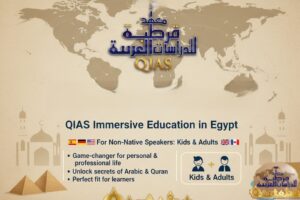
Doubtless, QIAS (Qortoba Institution for Arabic Studies) elucidates the efficaciousness of bespoke Arabic and Quranic learning programs tailored for non-native speakers, with a particular focus on internal tourism endeavors spearheaded by the venerable institutions such as Al-Azhar Al- Sharief in Cairo . By synergizing linguistic acquisition with spiritual education, these initiatives foster cultural affinity and interfaith understanding, targeting diverse cohorts across the globe such as Spain, Germany, Canada, America, Britain, and France. QIAS delineates the pedagogical frameworks, immersive strategies, and socio-cultural impacts of these programs, underscoring their role in bridging linguistic and theological lacunae.
Given, the proliferation of Arabic and Quranic studies programs for non-native speakers is a testament to the burgeoning recognition of Islam’s global significance and the Arabic language’s centrality to Islamic discourse. QIAS, paragon institution of Arabic and Islamic scholarship form alpha to omega, has pioneered internal tourism programs that combine language acquisition with spiritual knowledge, attracting learners from Spain, Germany, Canada, America, Britain, France and all over the world. These programs’ methodologies, outcomes, and broader implications for interfaith dialogue and cultural exchange, navigate the labyrinth of linguistic and cultural complexities.


QIAS Pedagogical Frameworks and Immersive Strategies
QIAS employs multifaceted pedagogical approaches, combining traditional Halaqas (study circles) with modern linguistic methodologies:
Contextualized Language Learning: Emphasis on Quranic and Classical Arabic, supplemented by colloquial dialects relevant to target regions (e.g., Modern Standard Arabic with Hispanic and Germanic learner adaptations), ensuring learners “hit the nail on the head.”
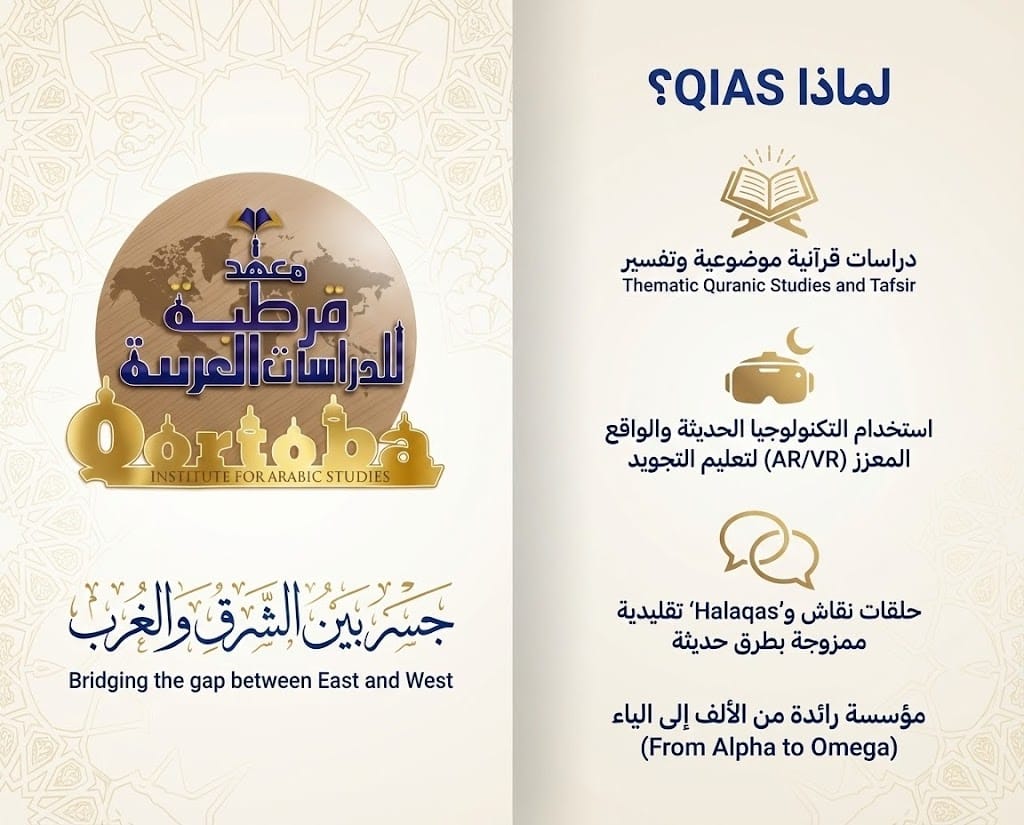
Thematic Quranic Studies: Thematic Tafsir (Exegesis) sessions exploring themes like ethics, jurisprudence, and spirituality, contextualized for Western learners such as non-native speakers learners from Spain, Germany, Canada, America, Britain & France, “cutting through the red tape” of cultural and linguistic barriers.
Cultural Immersion: Homestays with local families, guided tours of Islamic heritage sites (e.g., Cairo’s Al-Azhar Mosque, Alhussein’s Mosque), and interfaith dialogues with local communities, fostering a “symphony of interactions” that amplify cultural understanding for non-native speakers kids or adults learners.
Target Cohorts and Geographic Focus


Spain and Germany: QIAS leveraging historical Andalusian and Ottoman legacies to foster cultural reconnection, “bridging the gap” between East and West.

Canada and America: QIAS addressing diverse Muslim diaspora needs and broader academic interests in Islamic studies, “playing to a global audience.”
Socio-Cultural Impacts
1. Cultural Synergy: QIAS courses participants often experience profound shifts in cultural perception, “striking a chord” with local communities.
Spiritual Enrichment: QIAS Quranic classes and engagement foster personal growth and interfaith empathy, “breathing life” into spiritual practices.
Academic and Professional Advancement: QIAS courses graduates frequently pursue advanced degrees or roles in academia, NGOs, or diplomatic services, “cutting through the Gordian knot” of linguistic and cultural complexities.
Challenges and Recommendations

QIAS Curriculum Adaptation: Continuous updating of materials to reflect contemporary contexts and learner feedback, ensuring programs remain “ahead of the curve.”
QIAS Technology Integration: Enhanced use of digital tools (e.g., AR/VR for Tajweed practice) to augment traditional methods, “hitting the mark” with tech-savvy learners.
In a nut shell, QIAS (Qortoba Institution for Arabic Studies) programs epitomize effective models for Arabic and Quranic education, merging linguistic proficiency with spiritual and cultural literacy. QIAS is nonpareil for Arabic non-native speakers kids or adults learners such as in Spain, Germany, Canada, America, Britain, France and across the world. Thus, harness the efficacious pedagogical paradigms in Arabic and Quranic Studies: QIAS exemplary initiatives for Arabic non-native speakers in Cairo, the capital city of Egypt. By fostering internal tourism, these initiatives cultivate global networks of informed, empathetic ambassadors for cross-cultural understanding, “leaving no stone unturned” in the pursuit of knowledge and unity.

Tag:arabic, Arabic alphabet, Arabic Grammar, Arabic language, Arabic languages . Arabic languages . arabic alphabet . arabic alphabet in english . arabic curriculum for kids ., Arabic languages . Arabic languages . arabic alphabet . arabic alphabet in english . arabic curriculum for kids . muslim learn arabic, learn Arabic languages . Arabic languages . arabic alphabet . arabic alphabet in english . arabic curriculum for kids ., Pourquoi étudier la langue arabe